
How IoT Is Changing Restaurants, Cafes, and Retail Stores
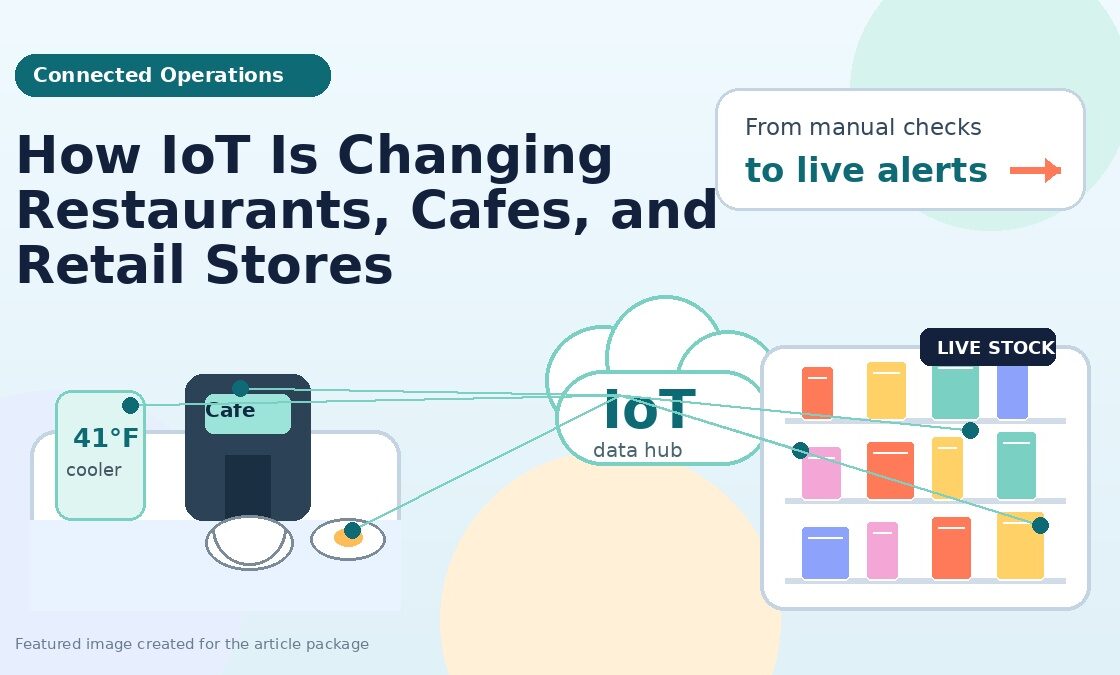
The Internet of Things, often shortened to IoT, sounds bigger than it feels in daily life. In a shop, it means ordinary equipment that connects to the internet and sends useful data. A fridge can warn a manager when the temperature rises. A coffee machine can show how many cups it made today. A shelf can report that a product ran low. A payment terminal can connect sales, stock, and loyalty details in one place.
Restaurants, cafes, and retail stores run on small details. A busy kitchen needs safe food temperatures. A cafe needs working grinders, milk stock, and a smooth line. A retail store needs correct shelf counts and clear prices. Staff can check these things by hand, but hand checks take time. Connected tools help owners see problems before customers notice them.
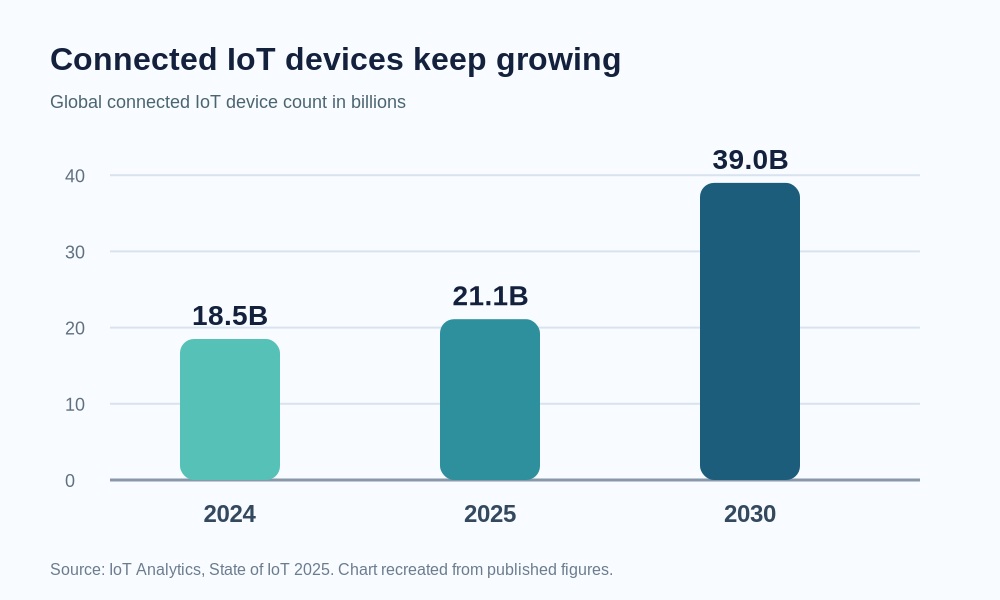
IoT has moved from a large-company idea into normal business planning. IoT Analytics reported 18.5 billion connected IoT devices in 2024 and expected 21.1 billion by the end of 2025. The same report estimated 39 billion by 2030. That growth explains why connected equipment now appears in kitchens, coffee bars, grocery aisles, stockrooms, and pickup counters. The devices cost less than they did a few years ago. Many systems also work with phones and simple online screens.
Restaurant operators already treat technology as part of daily work. The National Restaurant Association reported that 76 percent of operators expected technology to give them a competitive edge. Many planned to spend on customer experience, service area efficiency, and kitchen efficiency. IoT supports those goals because it connects the back of house, the counter, and the store floor.
Smarter food safety in restaurants
Food safety offers one of the clearest uses for IoT in restaurants. Every kitchen depends on temperature control. The United States Food and Drug Administration says the danger zone for many foods usually sits between 41 degrees Fahrenheit and 135 degrees Fahrenheit. Bacteria can grow fast in that range. The FDA also explains a two-step cooling process for cooked food. Food should cool from 135 degrees to 70 degrees within two hours. Then it should reach 41 degrees or less within the next four hours.
A connected thermometer does not replace kitchen skill. It gives staff a stronger safety net. Sensors inside walk-in coolers, prep fridges, freezers, and hot holding units can log temperatures all day. A manager can get an alert when a cooler door stays open or a freezer starts warming up. The team can move food, call maintenance, or adjust the unit before waste grows.
Sensor logs also help during inspections. Paper logs often suffer from gaps. A sensor log gives a timestamped record. Managers can review patterns and find which unit causes problems at certain hours.
Equipment that warns before it fails
Restaurants and cafes use machines that work hard for long hours. Fryers, ovens, dishwashers, grinders, espresso machines, ice makers, and refrigerators all affect service. One broken machine can slow the line and damage food quality.
IoT equipment monitoring helps teams spot repair needs earlier. A connected fridge can track compressor cycles. A fryer can track oil temperature and run time. An espresso machine can count shots, water flow, and cleaning cycles. These details help managers schedule service before a full breakdown.
This protects smaller cafes too. A single espresso machine often carries the morning rush. A connected machine can flag cleaning needs, pressure changes, and heavy usage. Staff still make the coffee. The device helps staff keep the machine steady.
Energy savings without guessing
Restaurants use a lot of energy. ENERGY STAR says restaurants use about five to seven times more energy per square foot than other commercial buildings. High-volume quick-service restaurants can use up to 10 times more. Refrigeration often takes the largest share of restaurant electricity, followed by lighting and cooling.
IoT gives owners a clearer view of that cost. Smart plugs, meters, thermostats, hood controls, and refrigeration sensors can show when equipment wastes power. A manager may find that a prep fridge runs too cold overnight. A cafe may see that display lighting stays on after closing. A restaurant may learn that a hood fan runs at full speed during slow prep periods.
Owners do not need a giant system at the start. A few sensors on the highest-cost equipment can show where money leaks out.
Faster service in cafes and quick-service restaurants
IoT also changes the customer side of food service. Digital menus, table QR codes, near-field communication tags, kiosks, kitchen display screens, and connected payment tools can move orders faster. Near-field communication means a customer taps a phone near a small tag. The phone opens a menu or payment screen. A QR code does a similar job through the camera.
The main value comes from fewer handoffs. A customer orders at the table or counter. The order reaches the kitchen screen. The point-of-sale system updates the bill and stock. Staff can focus on food, drinks, cleaning, and guest questions instead of rewriting the same order.
Good design matters here. A messy ordering screen creates mistakes. IoT works best when it removes repeat tasks and keeps human service easy to reach.
Retail shelves that report stock problems
Retail stores need the right item on the right shelf at the right time. Manual stock checks take time. Barcode scans work, but staff must scan each item or shelf label. IoT tools cut that delay.
Radio frequency identification, or RFID, uses small tags that a reader can scan without seeing a barcode. Retailers use these tags to count items faster and track goods through the supply chain. A GS1 US and Auburn University RFID Lab study found that brands and retailers using RFID for shipment checks achieved 99.9 percent order accuracy. The same study found that 69 percent of inbound orders had errors when RFID was not used. The report also cited inventory accuracy rising from 63 percent to 95 percent in retail use cases.
Smart shelves add another layer. Some shelves use weight sensors under products. The shelf can notice when stock drops below a set level. Research on smart shelves describes Wi-Fi-connected scales that turn weight changes into live inventory updates. This helps staff refill shelves before empty gaps spread across the aisle.
Electronic shelf labels also change store work. These small digital price tags let a store update shelf prices from a central system. Staff do not need to print and replace hundreds of paper tags during price changes. This reduces price mismatch between the shelf and checkout.
Checkout, queues, and store flow
Connected retail also targets checkout friction. Self-checkout, smart carts, scan-and-go apps, and camera-based systems all aim to reduce waiting. Amazon describes its Just Walk Out system as a mix of sensors, computer vision, and RFID that tracks item selection and automates payment when shoppers leave.
This technology does not fit every store. A small boutique may prefer personal service. A supermarket may need a mix of staffed lanes, self-checkout, and assisted mobile checkout.
IoT can also help with store flow. Door counters and occupancy sensors show traffic by hour. A manager can place more staff near checkout before the rush starts. Stores can measure movement patterns without identifying every person.
Better buying and less waste
Restaurants, cafes, and shops all lose money when stock does not match demand. A restaurant may throw away spoiled produce. A cafe may run out of oat milk before lunch. A clothing store may hold too many sizes in the stockroom while the sales floor lacks popular items.
IoT helps owners connect sales data with live stock signals. A cafe can see how weather, time, and local events affect drink demand. A restaurant can track walk-in temperatures beside waste logs. A retailer can link shelf gaps with missed sales. These details make ordering less random.
The goal should not be perfect automation. The goal should be better decisions. A chef still understands menu quality. A cafe manager still knows regular customers. IoT gives each person cleaner data to use.
Music and store mood
Music for Restaurant needs also sit inside the IoT shift. A restaurant can connect speakers, tablets, point-of-sale data, and daily schedules in one system. The manager can set breakfast music, lunch music, and dinner music without walking to every speaker. A cafe can keep soft music near the counter and lower sound near the reading area. A retail store can match music to store hours and customer flow while keeping the sound comfortable.
A smart music setup can also support the staff routine. The system can lower volume during busy ordering periods, start a closing playlist near the end of the day, or mute one zone during a small event. Some systems can link with sensors that read crowd levels or noise levels. The point stays simple. Music should support service, not fight it. A loud playlist can make orders harder. A steady and controlled setup gives the place a cleaner feel.
The risks owners should not ignore
Connected devices bring security risks. A camera, smart display, or connected fridge can become a weak entry point when a business leaves default passwords or skips updates. NIST keeps guidance for IoT cybersecurity. The Federal Trade Commission also warns businesses to think about security and privacy when they use connected devices.
A 2025 Palo Alto Networks report found that 48.2 percent of connections from IoT devices to company IT systems came from high-risk IoT devices. That number should make store owners careful. A small business does not need a huge security department to improve. It needs a separate network for guest Wi-Fi, strong passwords, regular updates, and a clear list of every connected device.
Privacy needs the same care. Cameras, loyalty apps, and location sensors can collect sensitive details. Stores should collect only what they need. They should tell customers what they collect and why. Staff also need clear rules. A sensor that helps refill shelves should not turn into a tool that tracks workers unfairly.
What comes next
IoT will keep changing physical stores in practical ways. Restaurants will use more connected cooling, cooking, and cleaning systems. Cafes will use smarter machines and simpler ordering flows. Retail stores will use RFID, smart shelves, digital labels, and better checkout tools.
The most useful systems solve clear problems. They protect food, reduce waste, save energy, keep shelves full, and shorten queues. IoT does not remove the need for good staff. It helps good staff see more. A kitchen becomes safer when the cooler speaks up early. A store serves customers better when shelves and stockrooms tell the same story.