
How Do You Get a Free Domain Without Pitfalls?
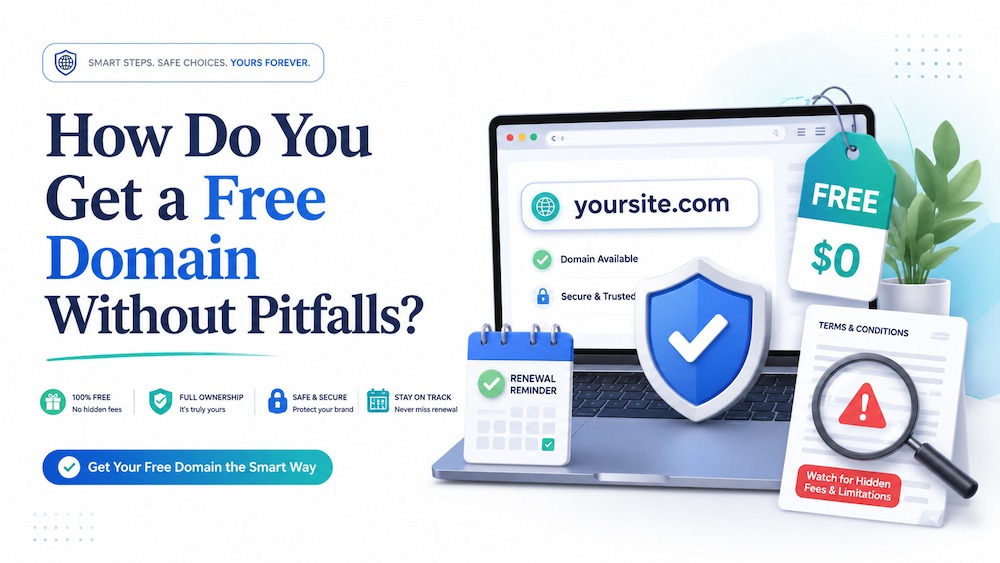
Building a website starts by getting an address that visitors can easily remember and trust. Many first-time site owners see paying for a domain as a needless obstacle before any page appears online. The good news is that plenty of legitimate routes exist to acquire a web address at no upfront cost. The difficulty is telling apart genuinely useful offers from those that end up trapping you later. Knowing how these deals really work, what conditions apply, and how to safeguard your interests saves you frustration and money. This guide covers the practical details so that you can make a confident choice.
The Real Reasons Companies Give Away Domains at No Charge
Hosting providers rarely give away web addresses out of generosity. The economics behind these offers begin to make sense once you step back and look at the bigger picture, considering how providers recover their initial costs over time. A domain typically costs a registrar somewhere between eight and fifteen dollars per year at wholesale. By pairing that address with a hosting plan or email package, a provider takes on a small cost for a customer who often stays for years.
Bundled deals frequently include a complimentary free domain name alongside hosting and mailbox services, which simplifies the setup for anyone launching a first project. This arrangement benefits both parties: you skip the registration fee during your first term, and the provider gains a subscriber who is likely to renew.
Why the Offer Makes Business Sense
The reasoning behind these promotional offers, when examined more closely by anyone curious about why companies willingly give things away for free, ultimately comes down to the concept of customer lifetime value, which measures long-term worth rather than immediate returns. Companies figure that one web address costs almost nothing compared to what an active account pays across several years. Marketing budgets treat the giveaway as an acquisition expense, much like a discount coupon that is handed out to attract new customers who might otherwise never sign up at all.
What You Trade in Return
Nothing is truly without cost. You accept hosting terms binding the address to your account temporarily. The fine print shows exactly what you agreed to.
Renewal Fees and Time Limits That Catch Newcomers Off Guard
The most common surprise tends to show up once the first year comes to an end. That complimentary address you originally claimed often renews at standard market rates, which are sometimes higher than the prices that independent registrars would normally charge you. Site owners who never bothered to check the renewal terms when they first registered suddenly find themselves facing an unexpected bill that they had not planned or budgeted for.
Time limits deserve equal attention. Some promotions grant the address free only for the initial twelve months, while others require a multi-year hosting commitment before the offer applies. If you cancel your hosting plan early, you may lose the address entirely or be charged a fee to keep it. Anyone planning to build effective marketing strategies for their site should factor these dates into their calendar so a lapse never catches them unprepared. Resources such as the practical rundown of SEO tools that serious bloggers rely on can help you plan your growth timeline alongside these renewal dates.
Reading the Terms Before You Commit
Every provider publishes renewal pricing, though it is sometimes hidden. Search specifically for the phrase “renews at” followed by a rate to find the figure. Take that figure and compare it carefully against what standalone registrars would charge you for the very same top-level domain, since prices can vary quite substantially between different providers. If the difference between the two rates turns out to be particularly steep, you always retain the option of transferring the address to another registrar entirely, provided that you wait until the promotional term has fully run its course and ended.
A Checklist for Claiming Your Free Domain the Safe Way
Approaching these offers with a clear plan removes most of the risk. A methodical review protects you from hidden clauses and ensures the address genuinely serves your goals rather than locking you into an arrangement you regret. The Forbes Advisor breakdown of how business owners can secure a domain at no cost offers a solid reference point for comparing what different providers promise.
Before you decide to finalize any registration on the platform, it is highly recommended that you carefully work through each of these important steps in the proper order:
- Confirm the free period’s exact length and whether it applies only to year one.
- Find the renewal rate and compare it with two independent registrars.
- Check if the offer requires a long-term commitment.
- Verify you are the legal registrant, not the provider.
- Read the cancellation policy to understand what happens if you leave.
- Confirm address transfer is permitted after the initial term.
Choosing the Right Extension
Most free offers include a widely recognized .com address. Some deals include country-specific or newer extensions. Choose the one that fits your audience and purpose instead of defaulting to whatever the promotion promotes most aggressively. A memorable and relevant address keeps paying off long after the free period has ended.
Keeping Control of Your DNS Settings and Ownership Rights
Owning a web address means little if you cannot control where it points. When you have full access to your DNS records, you gain the ability to connect the address to any hosting service you choose, set up email accounts, and add important security records. Some providers deliberately restrict this level of control during their promotional periods, which can become a serious problem later on if you ever decide to move your site elsewhere.
Ownership is the other pillar worth guarding. Always confirm that the registration lists your name and contact details as the registrant. If the provider registers the address under its own name, you do not truly own it, and reclaiming it later can become a legal headache. Decisions about where to host also shape your control, and a thorough look at the differences between cloud platforms and dedicated server setups helps you understand how hosting architecture affects your flexibility.
Preparing for a Future Move
Even if you feel satisfied with your current provider today, your circumstances can always change. Secure your credentials, note transfer dates, and understand the unlocking process.. Once your promotional term ends, you can freely stay or switch on your terms, not pressured by a renewal notice.
Your Next Steps Toward a Smart Setup
Getting a web address for free is possible when you stay alert. Take the time to verify the terms of the agreement, keep careful track of your upcoming renewal dates, guard your ownership rights against any potential loss, and make sure that you retain full and complete control over all of your settings. A modest amount of diligence at the very beginning prevents the most common regrets that people encounter, and it leaves you holding an address that genuinely and completely belongs to you. Once these safeguards are firmly in place, you can direct your energy toward building something genuinely worth visiting, rather than spending later months untangling avoidable complications that could have been prevented from the beginning.
Frequently Asked Questions
Which domain extensions are usually left out of free domain promotions?
Standard extensions like .com, .net, and .org are almost always included, but newer or premium extensions such as .io, .ai, or country-specific codes are frequently excluded from the free tier. Providers reserve these for paid registration because their wholesale cost runs much higher than a typical TLD. If your project needs a specific niche extension, it is worth checking the exclusion list before assuming it will be free.
What happens to my free domain if I cancel my hosting plan early?
Most providers place the domain under a registrar lock tied to your account, so canceling hosting before the first renewal often means losing access to the address entirely. You typically get a short grace window, sometimes just 15 to 30 days, to request a transfer code before the name gets released or auto-renewed at full price. Always check the cancellation policy before you sign up, since this detail rarely appears in the main pricing page.
What mistakes do people commonly make when picking a free domain deal?
A frequent error is ignoring the automatic renewal price, which can jump from zero to 20 dollars or more without warning once the first term ends. Another common mistake is skipping WHOIS privacy protection, which some providers charge for separately even though it should be standard. People also forget to check whether the offer locks them into a multi-year contract instead of a simple annual renewal.
Can I move my free domain to a different registrar after the first year?
Yes, but you need an EPP authorization code from your current provider, and some companies impose a waiting period of 60 days after registration before releasing it. A few providers also charge an administrative fee for early transfers, which can offset any savings from switching. It helps to request the transfer code in writing before your renewal date so you are not caught off guard.