
Xiaomi XRING O3 Hits 5.23M, Far Ahead of Snapdragon 8 Elite Gen 5
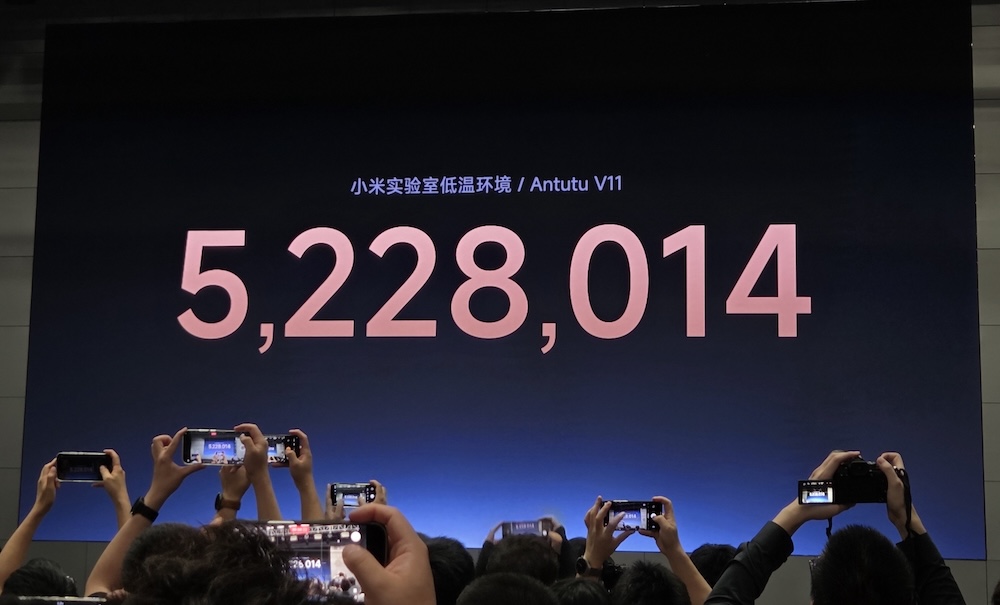
Xiaomi has unveiled the XRING O3, its latest in-house smartphone chip. Its reported 5,228,014-point AnTuTu V11 result sits above widely published results for the Snapdragon 8 Elite Gen 5 and MediaTek Dimensity 9500.
The result deserves attention, but benchmark conditions and scoring methods matter. Xiaomi’s number came from a cooled laboratory run, so it should be treated as a demonstration of the chip’s performance ceiling rather than a prediction for every retail phone.
XRING O3 reaches 5,228,014 in AnTuTu V11
As a system-on-chip, or SoC, XRING O3 places the main processor, graphics processor, artificial-intelligence hardware and several other phone components on one piece of silicon.
Xiaomi says the XRING O3 contains 24 billion transistors and measures about 133 square millimetres. The company uses a 3-nanometre class manufacturing process. The new chip also moves to a much more aggressive processor design than the earlier XRING O1.
A fair benchmark comparison uses complete scores
AnTuTu’s chip table lists a 1,096,583 CPU score and a 1,352,477 GPU score for Snapdragon 8 Elite Gen 5. Adding those two components produces the smaller figure used in some comparisons:
1,096,583 CPU + 1,352,477 GPU = 2,449,060

The iQOO 15 Ultra provides a more useful Snapdragon comparison because its results are complete AnTuTu V11 totals. The supplied retail-device run reached 4,243,037 points, AnTuTu’s review measured 4,356,232, and iQOO advertises a 4,518,403 laboratory result. These runs show that the phone has crossed 4.2 million multiple times.

Not every run stays above 4.2 million. AnTuTu’s July 2026 ranking lists a 4,128,314-point average for the iQOO 15 Ultra. Temperature, performance mode, memory configuration and software can all move the result.
Against the 4,243,037 retail result, Xiaomi’s 5,228,014 laboratory score is about 23% higher. The difference falls to about 16% against iQOO’s advertised laboratory figure. Neither percentage is a controlled chip-to-chip result, but both are more meaningful than comparing a complete score with a CPU-plus-GPU subtotal.
An independent Vivo X300 Pro test with the Dimensity 9500 produced 3,331,723 points. Xiaomi’s O3 laboratory score sits about 57% higher than that particular result.
XRING O3 vs Snapdragon 8 Elite Gen 5 vs Dimensity 9500 architecture
The three chips take different paths to flagship performance. Xiaomi and MediaTek use Arm’s latest C1 processor family. Qualcomm uses its own Oryon processor design.
| Chip | CPU architecture | Graphics | Memory | Process |
|---|---|---|---|---|
| Xiaomi XRING O3 | 10-core Arm C1-family design with a peak clock of 4.35GHz | 16-core G2-Ultra NX | LPDDR6 | 3nm class |
| Snapdragon 8 Elite Gen 5 | 8-core third-generation Qualcomm Oryon design. It uses two Prime cores and six Performance cores. | Qualcomm Adreno graphics with a sliced architecture and hardware ray-tracing support. | LPDDR5X | TSMC 3nm N3P |
| MediaTek Dimensity 9500 | 8-core Armv9.3 all-big-core design. It has one C1-Ultra core at 4.21GHz, three C1-Premium cores at 3.5GHz and four C1-Pro cores at 2.7GHz. | Arm Mali-G1 Ultra MC12 with 12 graphics cores and hardware ray tracing. | LPDDR5X up to 10,667Mbps | TSMC 3nm N3P |
Xiaomi moves to a 10-core all-big CPU
Xiaomi does not use traditional low-power little cores in this design. More high-performance cores can help with heavy multi-core work. Video processing, large applications and demanding games can make better use of that extra capacity.
Xiaomi also reports a Geekbench 6.5 single-core score of 3,945 and a multi-core result above 15,000. Those figures suggest a large jump in multi-core speed.
Core counts do not decide the Snapdragon comparison
This difference matters when comparing core counts. Ten XRING cores do not automatically make the Xiaomi chip 25% faster than an eight-core Snapdragon. Each core has a different design. Cache, memory speed, software scheduling and power limits also affect performance.
The G2-Ultra NX GPU is one of XRING O3’s biggest upgrades
Xiaomi claims an 85% graphics performance increase over its previous generation, along with lower power use.
The new graphics unit supports third-generation hardware ray tracing. Xiaomi has not yet published enough low-level information to compare one G2-Ultra NX core directly with an Adreno or Mali graphics core, so their core counts should not serve as a direct speed comparison.
LPDDR6 gives XRING O3 another advantage on paper
XRING O3 also introduces support for LPDDR6. LPDDR stands for low-power double data rate memory. Phone makers use this type of memory because it combines high bandwidth with low power use.
Xiaomi claims memory bandwidth of up to 113.8GB/s. Faster memory can help the CPU, graphics processor and artificial intelligence hardware move large amounts of data with less waiting.
The chip also carries about 60MB of on-chip cache. Cache is fast memory placed close to the processors. It reduces how often the chip needs to fetch data from slower main memory.
Snapdragon 8 Elite Gen 5 uses LPDDR5X memory. Dimensity 9500 also supports LPDDR5X. Xiaomi’s early move to LPDDR6 could help memory-heavy tasks, but real gains will depend on the memory fitted to each phone.
XRING O3 puts much more focus on on-device AI
Xiaomi describes XRING O3 as an artificial intelligence flagship chip. The company rebuilt its neural processing architecture for local AI models, including Xiaomi’s MiMo technology.
Xiaomi rates the neural processing unit at 200 TOPS under its A8W4 format. TOPS means trillions of operations per second. The chip also reaches a claimed 3.13 trillion floating-point operations per second for vector work.
AI performance numbers need careful comparison. Different companies use different numerical precision and test methods. A 200 TOPS Xiaomi figure cannot be compared directly with an unrelated Qualcomm or MediaTek number without matching the workload and precision.
Qualcomm uses its Hexagon neural processor in Snapdragon 8 Elite Gen 5. MediaTek uses the NPU 990 with its second-generation generative AI engine in Dimensity 9500.
What retail XRING O3 testing still needs to prove
The laboratory score establishes a high performance ceiling, but it cannot show sustained gaming speed, battery drain, camera processing, modem quality or graphics-driver support. Shipping devices still need tests under normal temperatures and matched power settings.
- Full and repeated AnTuTu V11 runs at room temperature.
- Long gaming tests that measure sustained speed, heat and battery use.
- Geekbench results from retail hardware and firmware.
- Power consumption during video recording and artificial-intelligence workloads.
Conclusion: XRING O3 still needs a real-world test
XRING O3 combines an ambitious CPU design, new graphics hardware, fast memory and expanded on-device AI capability. However, its 5,228,014-point result came from a low-temperature laboratory run. A retail smartphone tested under normal conditions will most likely score lower. Until shipping XRING O3 phones are tested independently, we do not know whether the chip can still outperform Snapdragon 8 Elite Gen 5 in comparable real-world tests.