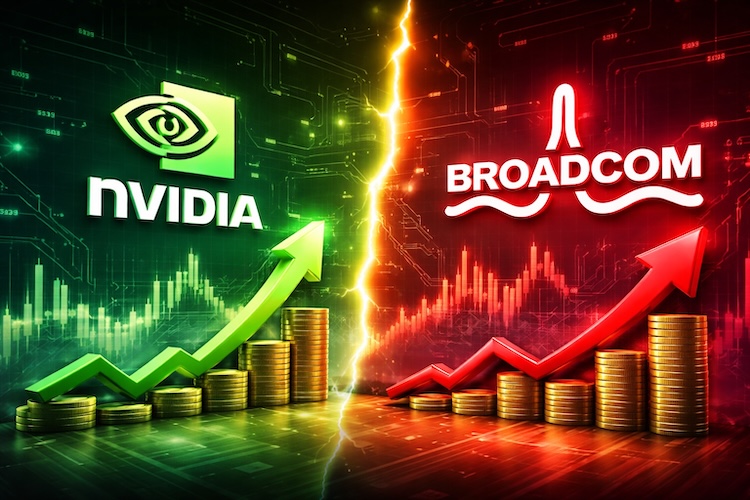
Nvidia or Broadcom Share: Which Is the Safer Investment in 2026?
If you’re a normal investor (not a day-trader with 6 screens), “safe” usually means:
- the business doesn’t live or die on one thing
- earnings and cash flow aren’t a rollercoaster every quarter
- the stock doesn’t panic-dump 15% because of one headline
- you get at least some cash back (dividends) while you wait
Let’s talk about what’s happening now (and what could matter through 2026–2027).
Nvidia (NVDA): still the king of AI… but the “headline risk” is real
The good news (what’s working today)
1) Demand is still crazy—especially for data center AI.
Nvidia keeps selling the “picks and shovels” for the AI boom: GPUs, systems, networking, and the software stack that makes it all run smoothly. That combo is why customers keep lining up even when prices are high.
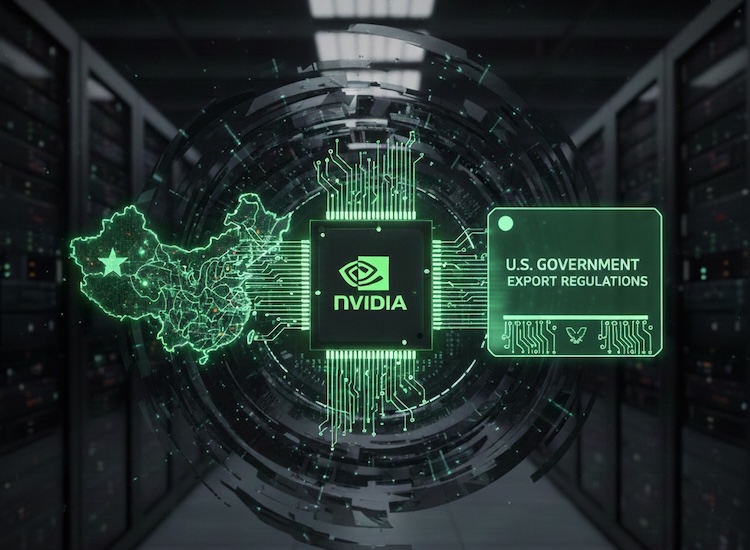
2) The China situation could swing Nvidia’s near-term story.
Here’s the big update you wanted included: Chinese companies have reportedly ordered more than 2 million H200 chips for 2026, while Nvidia reportedly has around 700,000 available and is discussing a production ramp that may start around Q2 2026. The catch is approvals and export rules still hang over it.
And on January 6, 2026, Nvidia’s CFO said the U.S. government is still working through license processing and Nvidia doesn’t yet know the ship timeline.
So yeah: China demand is there, but it’s not as simple as “they want it, so Nvidia ships it tomorrow.”
3) Product roadmap momentum is still a tailwind.
Nvidia’s pushing hard on its current platform, and it’s also talking about what comes next in its roadmap. (Translation: customers aren’t just buying a chip, they’re buying into an ecosystem and a forward plan.)
The bad news (what can bite Nvidia investors)
1) Export rules can change your stock price faster than earnings can.
Even when demand is huge, export restrictions (or licenses) can block the revenue from landing when investors expect it. The U.S. has repeatedly tightened controls on advanced AI chips, and Nvidia has had to create “China-compliant” versions because of that.
This is the kind of risk where you can be “right” on the business… but still get whacked on the stock for months.
2) Supply isn’t unlimited, even if demand is.
Nvidia relies on outside manufacturing and advanced packaging capacity, which can be tight during big ramps. When supply is constrained, Nvidia has to prioritize certain customers, and that can push out deliveries and keep the market on edge.
3) Nvidia is priced like a superstar (because it is).
That’s both good and bad. When expectations are sky-high, you don’t need “bad results” to drop the stock—sometimes you just need “not perfect.”
4) Competition is coming from everywhere.
AMD, custom chips inside big cloud companies, and more “good enough” alternatives won’t kill Nvidia overnight, but they can pressure margins and growth rates over time. The market will react to any sign of that.
Nvidia in one line: Best-in-class growth story, but it can be a stressful hold if you hate surprises.
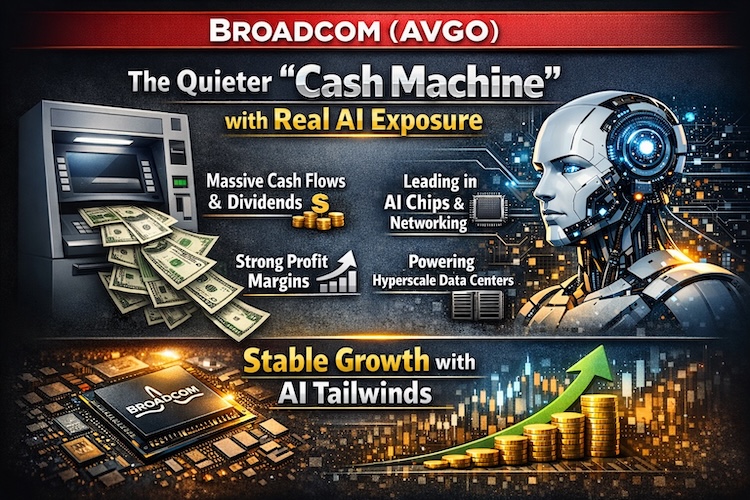
Broadcom (AVGO): the quieter “cash machine” with real AI exposure
The good news (why people call it “steadier”)
1) Broadcom is diversified in a way Nvidia isn’t.
Broadcom sells the plumbing that makes big tech work: networking, connectivity, custom chips… and now a huge software business after VMware. That mix tends to smooth out bumps.
2) AI is a major growth engine here too—just in a different way.
Broadcom is big in custom AI accelerators and Ethernet switching/networking for AI data centers. In its FY2025 Q4 results, Broadcom said revenue was $18.0B (+28% YoY), and AI semiconductor revenue grew 74% YoY.
For FY2026 Q1 guidance, Broadcom guided about $19.1B revenue and said AI semiconductor revenue is expected to double YoY to $8.2B.
So Broadcom isn’t “missing the AI boom.” It’s just playing a different position on the field.
3) The dividend situation is night-and-day vs Nvidia.
Broadcom increased its quarterly dividend to $0.65 per share, targeting $2.60 annually, and noted it’s the 15th consecutive annual dividend increase since starting dividends in fiscal 2011.
Nvidia’s dividend is basically symbolic at $0.01 per share quarterly.
If you like getting paid while you hold, Broadcom is the clear winner.
The bad news (what Broadcom investors should watch)
1) AI growth is great… but the market is watching margins.
Broadcom’s stock has reacted sharply because investors worry that booming AI sales may come with lower margins than other segments. That concern has been a big driver behind post-earnings drops even when results look strong on paper.
2) VMware “integration risk” is real, and the noise isn’t going away.
Broadcom’s VMware changes (pricing, bundles, contracts) have upset parts of the market, and there’s ongoing pressure/criticism in Europe that regulators didn’t take concerns seriously enough.
That doesn’t mean Broadcom is doomed—it means the software side can bring political and customer pushback that chip companies don’t always deal with.
3) Customer concentration still matters.
Broadcom sells to giant customers. That’s great… until one of them slows spending or shifts strategy. It’s not an “emergency today,” but it’s always on the risk list.
Broadcom in one line: Not as flashy, but built to be held—and it pays you while you wait.
Short-term vs long-term: what usually plays out
Over the next 12–24 months (2026–2027 vibes)
- Nvidia can move fast in either direction because it’s driven by: export headlines, supply timing, and giant customer orders. The China H200 demand story alone can create big swings depending on licenses and approvals.
- Broadcom usually moves on execution + guidance: AI orders, margins, VMware progress, and dividend/cash flow.
Longer term (3+ years)
- Nvidia has the higher “ceiling” if AI compute demand keeps compounding and Nvidia stays the default platform.
- Broadcom has a more “all-weather” profile: AI + networking + software + dividends, which tends to age well if you’re the patient type.
So… which one is safer?
If you mean safer = fewer sleepless nights, Broadcom is usually the better fit:
- more diversified revenue streams
- meaningful and growing dividend
- AI exposure without being a one-story stock
If you mean safer = “I want the AI winner, long-term”, then Nvidia can still be “safe enough” for the right person—but only if you accept that export rules, supply constraints, and valuation mood swings can hit hard even when the business is strong.
A very “normal investor” way to think about it
- If you want steady + paid-to-hold → Broadcom leans safer
- If you want maximum upside and can handle chaos → Nvidia has the bigger rocket
Important Note: Not financial advice—just the cleanest way to match the stock to your risk tolerance. This is just an analysis, real market situation could be different. So, do your own research before making any decision, it’s your money after all.